

The Reason Lighting Makes Your Home Look Smaller
Our Team Explains Why Wall Lighting Is A Key Component of Luxury Lighting Design
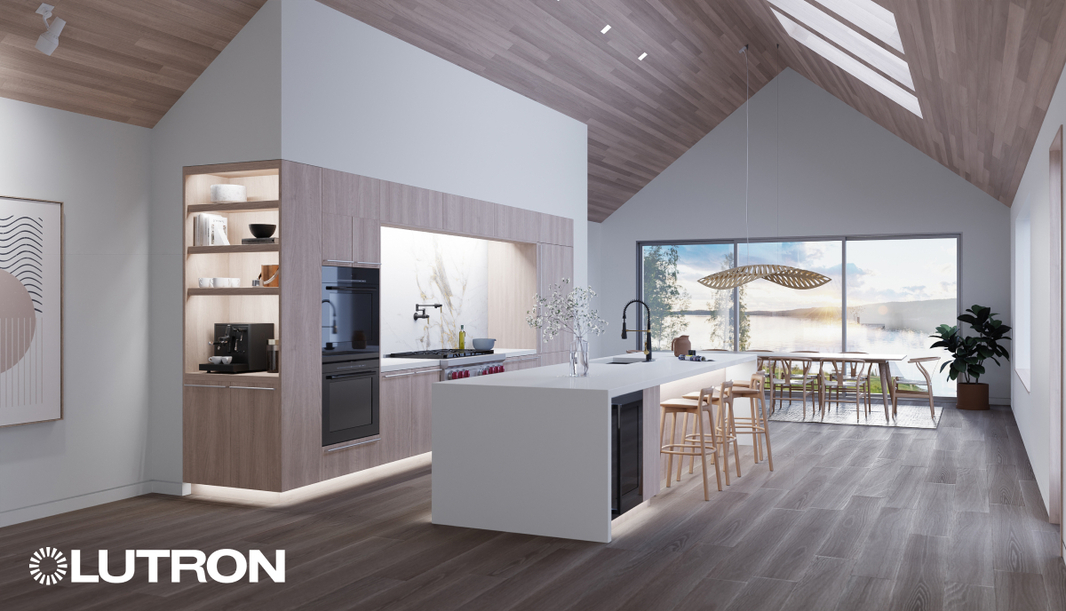
When we talk about lighting a home, the conversation usually focuses on where the fixtures go in the ceiling. Most homeowners—and even many builders—treat the ceiling like a lighting grid with fixtures aimed straight down at the floor. While this gets the job done for basic visibility, it often creates what we call the "Cave Effect." You end up with bright spots on the carpet but dark, heavy walls that make a room feel smaller and more enclosed than it actually is.
The reality is our eyes don’t perceive the size of a room by looking at the floor. We gauge space by the light reflecting off vertical surfaces. By shifting your lighting design's focus to the walls, you make the entire space feel more expansive. That’s why our luxury lighting designs in Portland, OR, always include unique wall lighting solutions.
SEE MORE: Uplift Your Home’s Interior With Lighting Design
Create a Sense of Space With Wall Washing
Wall washing is one of the most effective ways to make a room feel larger and more open. This technique uses fixtures designed to "wash" a wall with an even, wide distribution of light from the ceiling down to the floor. By uniformly illuminating the entire surface, you hide minor drywall imperfections and eliminate the shadows that normally make a room feel cramped.
We often recommend wall washing for narrow hallways or basements. It’s the secret to making a tight corridor feel like a grand gallery or turning a lower-level suite into an airy, inviting living space. And at times, it’s great for highlighting art or architectural features.
Highlight Textures and Decor With Wall Grazing
Wall washing creates a smooth, open look. Wall grazing focuses the eye. For this technique, we place the light source much closer to the wall to highlight the "peaks and valleys" at the surface.
If you have a hand-carved stone fireplace, a reclaimed wood accent wall, or custom Venetian plaster, grazing is how you make those materials "pop." The high-contrast shadows reveal the depth and craftsmanship of the material in a way that standard overhead lighting never could. Placing the fixture too far away flattens the texture, while placing it too close creates "hot spots" that distract the eye. A professional lighting designer helps you find the sweet spot.
Bring Your "Invisible" Architecture to Light
In addition to these high-level wall lighting solutions, our designs include niche lighting techniques that draw attention to areas most people ignore: the corners and the ceiling line.
- Cove Lighting: By lighting the vertical gap between a dropped ceiling and the wall, we create a sense of "levitation." This makes the ceiling feel higher, and the room feel less compressed.
- Articulating Corners: Lighting the corners of a room is the fastest way to eliminate "dead zones." Lighting the very edge of the architecture is often the difference between a home that looks "finished" and one that feels like a work in progress.
Why Fixture Selection Matters
You cannot achieve these effects with the standard recessed cans you find at a big-box home center. To get vertical illumination right, you need specific "Wall Wash" trims that use asymmetric reflectors to push light sideways toward the wall.
At Eighteen Group, we also place great emphasis on color consistency. There is nothing that ruins a luxury aesthetic faster than having light that looks crisp and white at the top of a wall and muddy or yellow at the bottom. Each fixture is tuned to the same Kelvin temperature, so the transition of light is consistent across your home.
Light should be treated as a building material, just like the wood or stone used in your home’s construction. If you are only lighting the floor, you are only seeing half the room. Our team works with architects and homeowners from the early design stages to ensure these vertical layers are baked into the home’s DNA.
Is your home suffering from the "Cave Effect"? Contact Eighteen Group today for a design consultation, and let’s look at how vertical illumination can expand your home’s footprint.