

TV or Projector? Let the Room Decide
Light, Seating, and Audience All Play a Role in the Choice
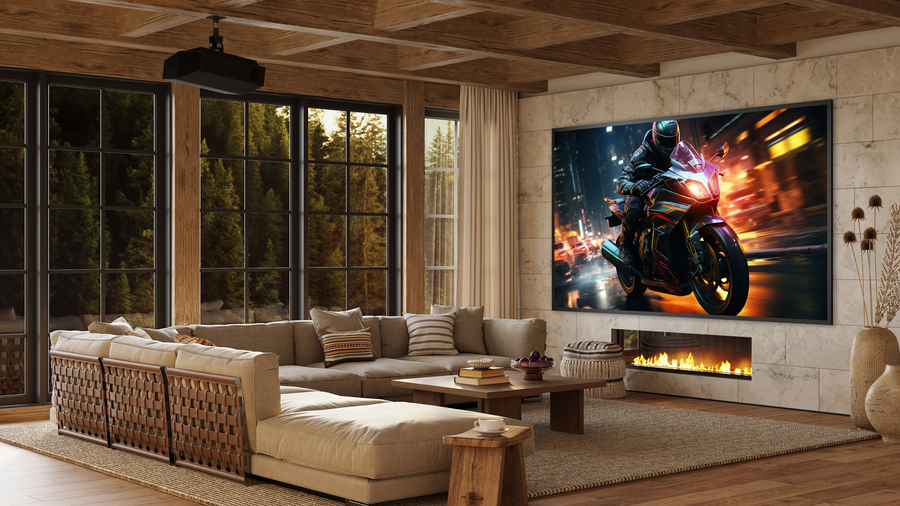
The TV vs. projector debate sometimes gets treated like a matter of pure screen size, but these days that’s less of a factor in many cases. But the better question is: what does your room actually need? Two factors settle this every time: how much ambient light you're dealing with, and how many people need a clear view. Once you look at your space through that lens, the right choice tends to become obvious. Of course, there will always be aesthetic and practical considerations too.
SEE ALSO: Is Your Home Cinema Ready for an Upgrade?
The Two Most Important Deciding Factors
Ambient light is the first variable. A living room with big windows and daytime traffic behaves nothing like a dedicated media room with blackout shades and no outside light. The more control you have over light, the more options open up. The second variable is the room and audience size. A cozy den seating three people has very different needs than a media room hosting game nights for twelve. Both the screen size and the viewing angles change once you're accounting for a crowd rather than a couple. Together, these two factors point you toward the right technology for your space.
When a TV Fits Best
TVs make the most sense in multi-use spaces like living rooms, great rooms, and spaces that need to look good and function well during the day, not just during movie night. For rooms fighting sunlight, high-brightness MiniLED and QLED-style panels hold up well, pushing enough light output to stay visible even with the shades open. For rooms with better light control, OLED delivers deeper black levels and richer contrast, especially once evening sets in.
TVs do have a ceiling, though. Practical sizes top out around 85 to 100 inches. Larger panels exist, but they get heavy, expensive, and difficult to source fast, and sometimes aren’t practical.
When a Projector Fits Best
Projectors take over where TVs hit their limits, and they are better suited to dedicated media rooms with larger seating counts and any space where scale matters more than daytime versatility. Laser projectors have largely replaced older lamp-based models, offering brighter output, more consistent color, and far less maintenance over the life of the system.
Short-throw projectors solve a different problem: rooms where a long throw distance isn't practical, letting you mount the unit close to the screen without sacrificing image size.
On the size question, projection has no real ceiling. Once you move past the 100-inch mark, image size becomes a matter of throw distance and room depth rather than manufacturing limits. And for rooms that can't go fully dark, ambient light rejecting (ALR) screens are engineered to preserve contrast and color even with some daytime light in the room.
Professional Design and Integration
Getting this decision right starts with an honest look at your room, not a default preference for one technology over the other. At Eighteen Group, we assess lighting conditions, room size, and how you'll use the space before recommending a display solution, so you end up with a setup built for how you live and entertain.
Not sure whether a TV or projector makes sense for your space? Give us a call at 503-515-1192 or fill out our contact form to schedule a consultation. We'll help you find the right fit for your home theater.